
Chapter 15
Then Rourke closed his folder.
“There’s something else I need to explain,” he said.
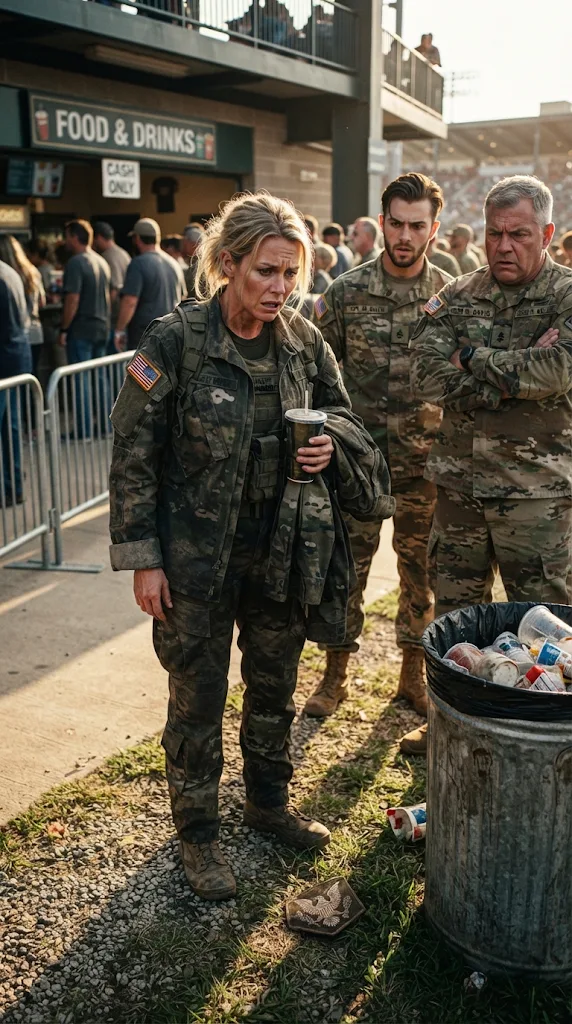
He described the softball game without attempting to excuse himself. He admitted that he’d made assumptions about a woman because of her size, age, and clothing. He told the soldiers how he’d grabbed my sleeve and thrown away the patch, believing the crowd would find his behavior entertaining.
“I thought I knew what military service was supposed to look like,” he said. “I thought somebody who didn’t fit that picture couldn’t possibly have done the things she claimed.”
He glanced toward me.
“I was wrong. And I hurt someone who had already carried more than I understood.”
One young private raised his hand.
“Corporal, why didn’t you just ask her about the patch?”
Rourke looked uncomfortable.
“Because I wasn’t interested in learning anything. I wanted people to laugh.”
That answer impressed me more than his apology had. He wasn’t presenting himself as a changed man who deserved admiration. He was explaining an ugly decision and accepting responsibility for it.
At the end, Montoya asked whether I wanted to say anything.
I stood and looked at the eleven soldiers.
“Eli Calder wasn’t a symbol when I met him,” I told them. “He was a frightened twenty-one-year-old who loved his mother and made jokes about airplane seats. Remember the person before you remember the memorial.”
One of the young women in the front row nodded. She was about my height. Afterward, she approached and asked whether women my size could qualify for difficult aviation rescue assignments.
I smiled.
“Come to the training center sometime. I’ll show you.”
That conversation stayed with me.
In September, I accepted a part-time civilian instructor position at Fort Campbell’s aviation training center. I continued flying emergency medical missions, but twice a week I taught young medics how to work safely inside a helicopter, communicate during emergencies, and manage the moments when an outcome couldn’t be controlled.
I didn’t tell them that confidence meant never being afraid. I told them confidence meant recognizing fear and doing the necessary work anyway.
Meanwhile, Della and I began spending time together. The first Sunday she invited me to dinner, I drove to her white house in Hopkinsville, Kentucky, carrying a grocery-store pie I hadn’t had time to bake. She served fried chicken, green beans, mashed potatoes, and biscuits that reminded me of the conversation I’d had with Eli aboard the helicopter.