
Chapter 2
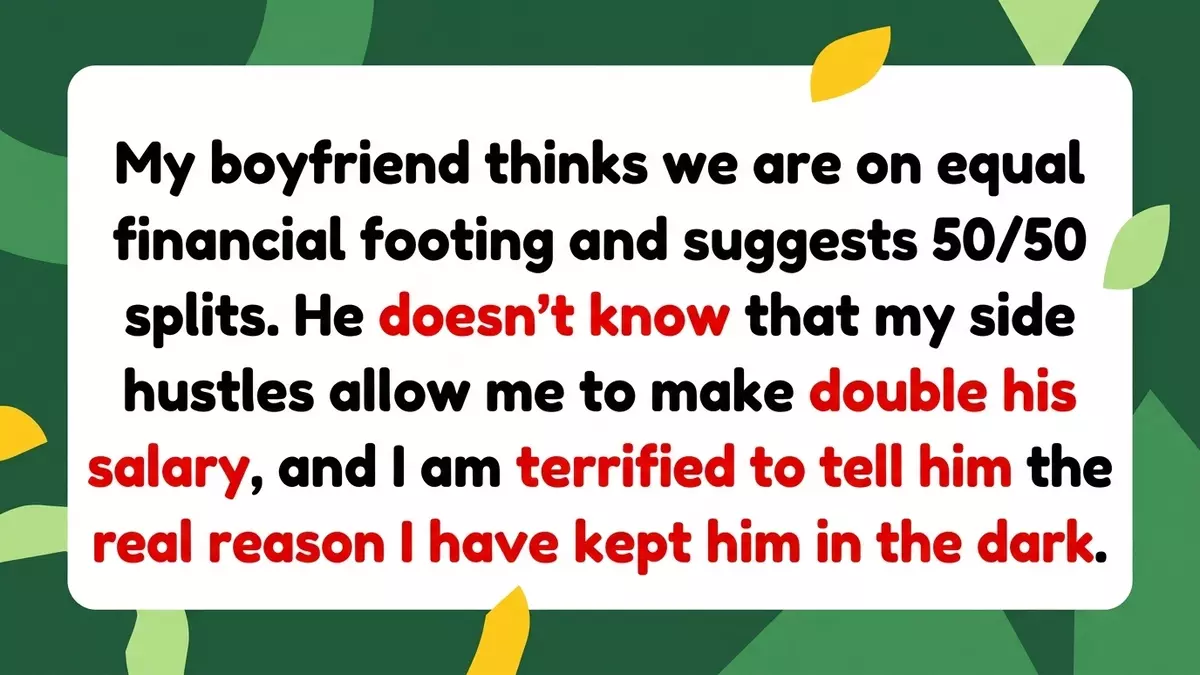
The core conflict in this scenario arises because the boyfriend is trying to build a transparent future based on an inaccurate financial premise. Believing they earn similar amounts, he is navigating household decisions, vacation budgets, and future milestones under the assumption of financial parity. By withholding the reality of her double income, the original poster inadvertently restricts his ability to make fully informed choices about their collective lifestyle. Over time, what began as a healthy personal boundary can easily mutate into a major relationship red flag, eroding the foundational trust necessary for a lasting marriage.
The Dilemma of Fifty-Fifty Splits When Income is Unequal
Splitting costs exactly down the middle is a highly popular approach for modern couples, but it can introduce subtle friction when a massive, unaddressed income gap exists. In this case, splitting the Hawaii vacation equally felt fair to the boyfriend, but it represents a vastly different percentage of their respective incomes.
When the higher-earning partner insists on a rigid 50/50 split while hiding their true wealth, it can lead to several unintended consequences:
Artificial Financial Strain
The lower-earning partner may stretch their budget to the absolute limit to keep up with a lifestyle that the wealthier partner can afford effortlessly. This can leave the lower earner with minimal personal savings, completely unaware that their partner has an immense financial cushion.
Resentment and Guilt
The partner holding the secret often experiences a compounding sense of guilt, watching their loved one sacrifice personal funds to meet an equal split. Conversely, if the secret is eventually exposed, the lower-earning partner may experience intense resentment, feeling as though they were manipulated into paying more than their fair share relative to the actual household wealth.
Balancing Autonomy with Transparency: A Path Forward
Achieving financial transparency does not mean a couple must immediately merge their bank accounts or forfeit their financial independence. It is entirely possible to maintain rigid personal boundaries while still providing a partner with the baseline data required for collaborative planning. Compromise in this arena requires moving away from absolute secrecy without jumping straight into shared liabilities.
Experts in relationship counseling often recommend a tiered approach to financial disclosure. Rather than revealing exact account balances or itemized invoices from freelance side hustles, the higher-earning partner can share a generalized income bracket. This acknowledges the reality of the disparity without exposing every detail of her financial safety net. From there, couples can transition from a strict 50/50 split to an equitable, income-scaled model, ensuring that both individuals contribute proportionately to their shared life while protecting their independent savings.