
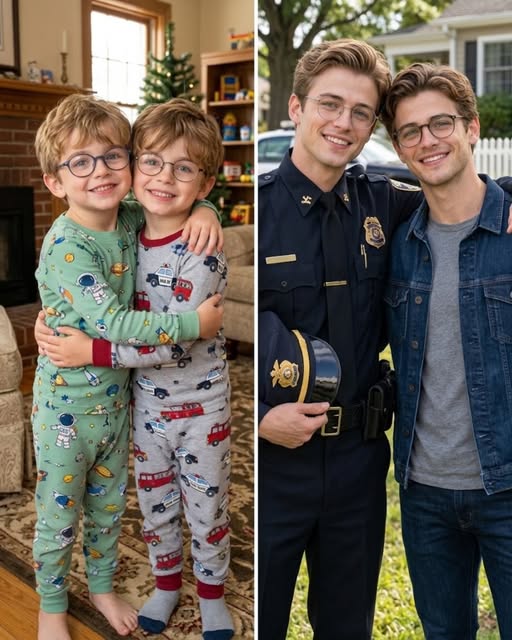
Chapter 2
He helped Simon build a wooden model airplane.
He sat beside me for hours while I drew pictures of imaginary cities.
At every school performance, Kenneth was in the front row.
Whenever we looked into the audience, he was there, clapping louder than anyone.
“You boys are my whole world,” he used to tell us. “Never forget that.”
And we believed him.
Beatrice was different.
She never hugged us unless someone was watching.
She rarely smiled when we entered a room.
And whenever we made even the smallest mistake, she reminded us that we should be grateful.
“You should thank God somebody was willing to take you in!” she would shout.
Once, when Simon accidentally broke a glass in the kitchen, she grabbed his arm so tightly that he cried.
“Do you have any idea what I've sacrificed for you two?”
He was only seven.
I remember standing beside him, terrified, saying, “I'm sorry, Beatrice. We'll clean it up.”
She looked at me with disgust.
“You'd both be rotting away in an orphanage if it weren't for us.”
Those words became the background noise of our childhood.
Simon learned to stay quiet.
I learned to apologize for things that weren't my fault.
Then, when we were ten, Kenneth died of a sudden heart attack.
Everything changed.
The house became colder.
Beatrice stopped pretending to care.
Our birthdays passed without cakes or presents.
Christmas became another ordinary day.
When I was thirteen, I asked whether we could put up the Christmas tree Kenneth used to decorate with us.
Beatrice didn't even look up from her television.
“Your father is dead, Mason. Stop acting like a baby.”
I went upstairs and cried quietly.
Simon found me sitting on the bedroom floor.
He didn't say anything.
He simply sat beside me until I stopped.
That was how we survived.
We had each other.
By the time we turned eighteen, we had learned not to expect anything from Beatrice.
When our high school graduation approached, I asked if she would attend.
She was standing at the kitchen counter, sorting through mail.
“Why would I waste an afternoon watching a bunch of teenagers walk across a stage?”
“Because we're graduating,” I answered.
“So?”
I swallowed.
“It's important to us.”
She placed the envelopes on the counter and looked at me.
“You're adults now, Mason. You're not my responsibility anymore.”
Simon was standing in the doorway.