
Chapter 1
Moving Back Home Leads Adult Child to Spark Bitter Household Feud
Hitting the reset button on your life as an adult is a profoundly humbling experience. For a 31-year-old woman, returning to her childhood bedroom after an unexpected job loss quickly transformed what was supposed to be a temporary sanctuary into a psychological minefield. Navigating career displacement is stressful enough on its own, but moving back into a suburban family home without a personal vehicle can make a fully grown adult feel instantly grounded and stripped of structural autonomy.
What was meant to be a quiet, peaceful pit stop to rebuild financial stability instead devolved into a exhausting daily struggle to maintain personal dignity. In these multi-generational living arrangements, old household dynamics die hard, and the boundaries of independent adulthood frequently vanish. The underlying friction finally reached a breaking point during a seemingly ordinary kitchen mishap, demonstrating that minor domestic disagreements are rarely about the immediate problem—they are often proxy wars for unexpressed resentment simmering just beneath the surface.
Moving Back Home Leads Adult Child to Spark Bitter Household Feud
The Anatomy of a Kitchen Blowup: From Toaster to Proxy War
The domestic peace officially shattered during a routine morning involving a smoking toaster. What should have been a simple, objective observation about a malfunctioning kitchen appliance instantly mutated into a bitter, deeply personal confrontation regarding respect, financial dependency, and the unwritten social contract of living rent-free under a parent's roof.
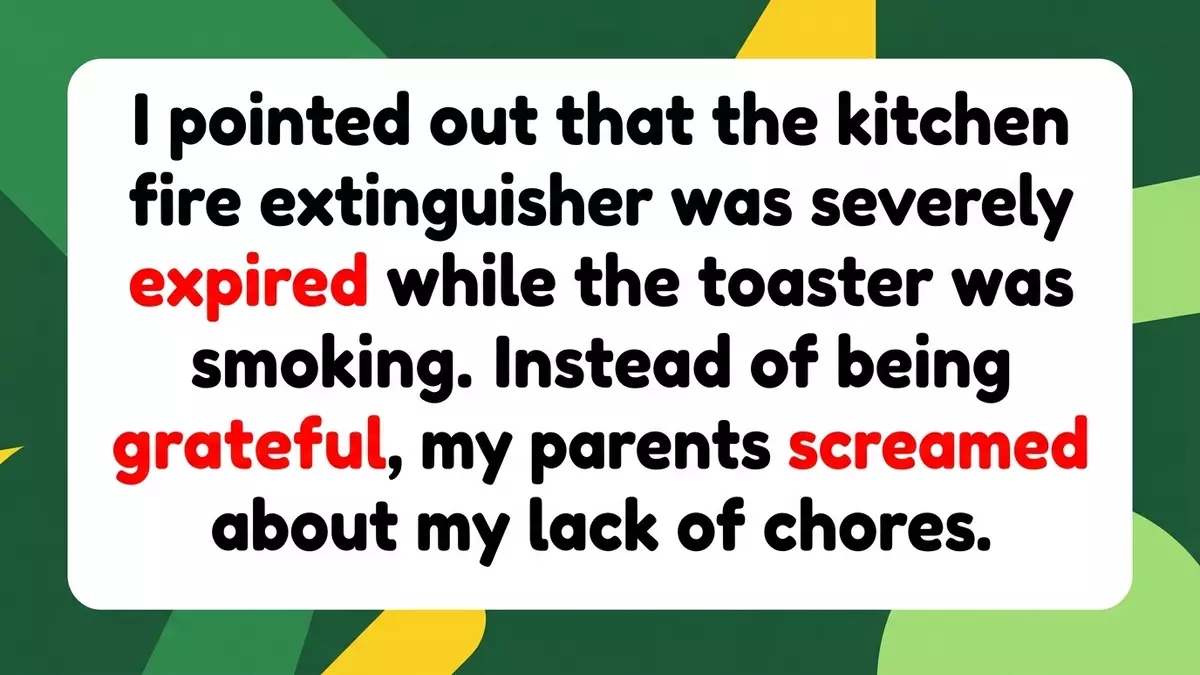
Upon noticing the smoky haze, the daughter inspected the household safety equipment and pointed out that the family’s fire extinguisher was severely expired. Instead of treating this as a routine home maintenance update, the parents reacted defensively, responding with a laundry list of unrelated personal grievances. The safety discussion instantly evaporated, replaced by an aggressive airing of complaints regarding uncompleted chores and unread mail. The daughter was left feeling that the moment she accepted financial shelter, she had inadvertently forfeited her right to basic adult respect.
The Psychology of Behavioral Regression in Shared Spaces
This painful household standoff highlights a well-documented psychological phenomenon known as behavioral regression. When fully autonomous adult children move back into their parental home under stressful circumstances, both parties almost automatically fall back into outdated, comfortable childhood roles.
Adult Job Loss & Relocation ──> Loss of Physical Autonomy ──> Behavioral Regression Triggered ──> Parent-Child Hierarchy Replaced Peer Dynamic
Family counseling experts note that when parents host their adult offspring rent-free, they frequently struggle to separate their genuine desire to assist from their long-standing instinct to manage and parent. This boundaries breakdown typically manifests as passive-aggressive emotional scorekeeping rather than direct, peer-to-peer communication. Instead of addressing house rules or contribution expectations calmly and directly, the parents weaponized a legitimate safety concern to vent their deeper anxieties regarding their daughter's lifestyle and independence.