
Chapter 2
The Prioritization Shift in Large Families
Family dynamics experts note that child-free adults in large families frequently experience a sharp shift in prioritization once nieces and nephews enter the picture.
"Sibling friction often stems from unresolved childhood patterns that resurface during high-stakes gatherings. When a minor child's social calendar is accommodated while an adult sibling's medical or financial constraints are dismissed, it highlights a profound lack of mutual respect." — Dr. Susan Newman, Social Psychologist
This imbalance creates an environment where child-free relatives are expected to maintain extreme flexibility, sacrificing their own mental peace and resources to keep the family peace.
Finding Self-Preservation in a Chaotic Family System
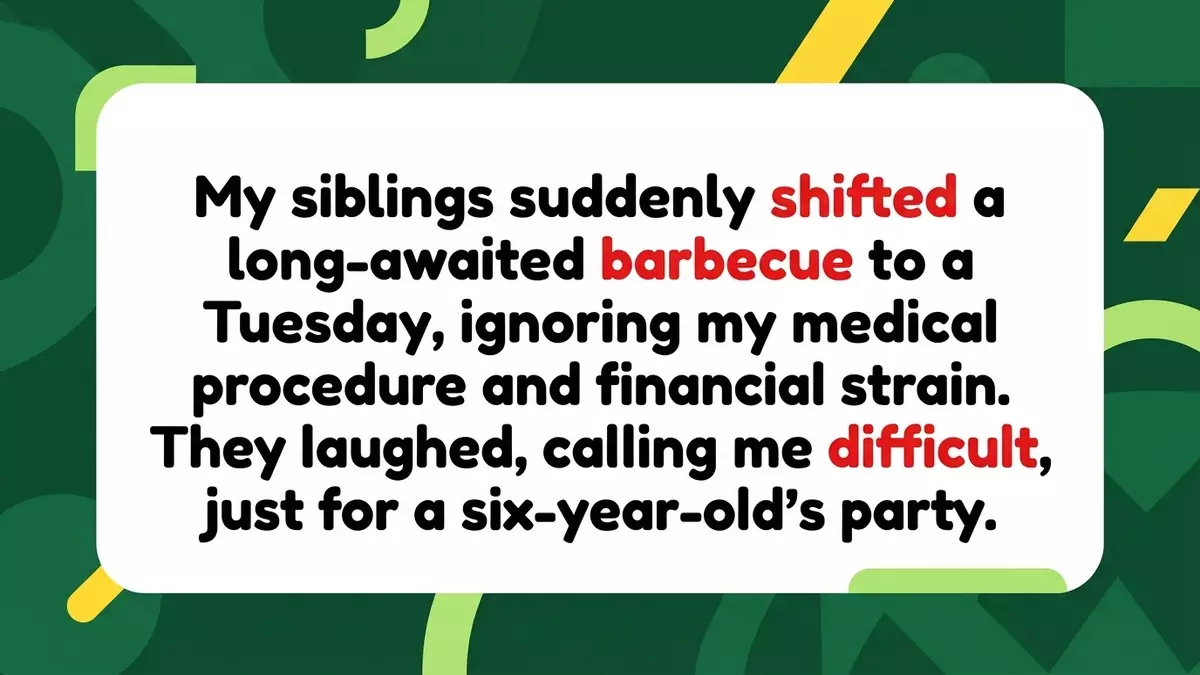
When the story surfaced online, the community overwhelmingly rallied behind the younger brother, though several commenters pointed out the messy, unpredictable reality of parenting a young child. Many users suggested that adult siblings often have to create their own separate traditions to bypass family gatekeepers entirely.
   [ Sister Shifts BBQ to Weekday ] ──► [ Younger Brother Protests ] ──► [ Labeled "Silly" & "Difficult" ]
                                                                                   │
   [ Focuses Entirely on Nephew ] ◄── [ Attends Portion of Event ] ◄───────────────┘
Ultimately, the young man chose to attend the rescheduled weekday barbecue despite the financial and logistical hurdles, choosing to prioritize his precious bond with his nephew over the ongoing conflict with his siblings. While the journey was costly and highly stressful, focusing his energy entirely on the joy of the reunion allowed him to bypass the sibling tension and protect his mental peace during the event.
How to Set Boundaries with Dismissive Relatives
Navigating family dynamics requires mastering the delicate art of maintaining family ties without allowing your personal, financial, or medical boundaries to be completely run over.
-
Practice Selective Participation: You are not required to overextend yourself to prove your love. A great way to manage dismissive relatives is by establishing a healthy boundary: attend only the specific portions of an event that are financially and logistically feasible for you, and exit early.
-
Establish Direct, Separate Connections: If family gatekeepers make group events too chaotic or expensive, bypass them. Coordinate directly with the traveling relative for a low-stakes, separate meetup—like a quick park visit or an ice cream run—focusing solely on the positive connection with your niece or nephew.
-
Deliver Factual, Non-Negotiable Refusals: When declining a sudden schedule change, remove all emotional pleading. State your limitation as a structural fact: "We cannot do Tuesday due to a medical procedure early Wednesday morning. We are disappointed to miss the group meal, but we will drop by for an hour on Sunday instead."